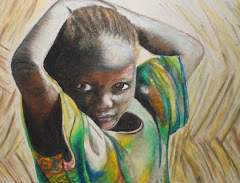
The Economist published an article on the 15th entitled “On the Frontier of Finance” which discusses the increased banking opportunities allowed by the continued boost in African economic growth. A main focus of the article was on the fact that most Africans do not have access to what we would consider basic and essential financial services. To better illustrate this point, The Economist lists some staggering yet somewhat unsurprising statistics…
• Only 20% of families in Africa have bank accounts.
• Private credit accounts for 18% of GDP in Africa
• Opening a bank account in Cameroon requires a minimum of $700 (more than many Cameroonians earn in a year)
• In Swaziland, a woman needs consent of her father, husband or brother to open an account or take out a loan.
• 75% of adults do not have a verifiable address
• Even in South Africa, where the financial sector is far more sophisticated, almost half of adults do not have bank accounts
The sustained increase in economic growth can be attributed in part to better economic management and also to an increase in overall political stability. This increase in stability in some African countries has also lead to more stable policies. The Economist reasons that these new policies are forcing banks to reach out to more customers while promoting access to financial services. In the mean time, technology has already helped to improve access. Recently, financial services have been offered over mobile phones in Kenya, Congo, and South Africa. “Subscribers can open accounts, check their balances, pay their bills or transfer money by typing a few commands on their mobile phones”. For more on mobile banking, check out the article, "A bank in every pocket".
Despite new technology and the new opportunities for Africa that come with sustained economic growth, African banking still has a long way to go. Africans lack confidence in local banks explaining why most private African finance is short-term or money is kept abroad. In addition, “Many African countries still have to develop and enforce policies and laws allowing banks to compete and operate more easily, while making sure they are financially solid—and customers are protected. In time, regional integration may help ease the problem of scale”.
Although it will be awhile before millions of Africans will stop 'storing their money under their mattresses,’ the economic growth in Africa has attracted a lot of foreign interest. “The Industrial and Commercial Bank of China, in the largest ever single investment in Africa, has offered $5.6 billion for a 20% stake in Standard Bank, of South Africa, which has operations in 18 African countries.” For more information on the Chinese involvement in Africa, try another article by the Economist: “Still Scrambling”.
Saturday, November 24, 2007

Sunday, November 18, 2007
Beauty on Sunday 11/18
CNN reports that over 200 children who served with militias in the Democratic Republic of the Congo have been released and are being returned to their families. (11/17/07)
BBC reports that Mwai Kibaki, Kenya's president, has pledged to crack down on politically instigated violence to ensure a peaceful vote. (11/15/07)
Both The New York Times and BBC report on Africa's increase in economic growth. "The trend indicates that a fundamental change is occurring in Africa, a World Bank official told the BBC." (11/15/07 & 11/14/07 respectively)
The Los Angeles Times reports on a teacher in Somalia, Abdulkhadir Wasuge, whose mission is to "ensure that 'young people don't miss out' on a chance to learn and grow." (11/11/07)
BBC reports that Mwai Kibaki, Kenya's president, has pledged to crack down on politically instigated violence to ensure a peaceful vote. (11/15/07)
Both The New York Times and BBC report on Africa's increase in economic growth. "The trend indicates that a fundamental change is occurring in Africa, a World Bank official told the BBC." (11/15/07 & 11/14/07 respectively)
The Los Angeles Times reports on a teacher in Somalia, Abdulkhadir Wasuge, whose mission is to "ensure that 'young people don't miss out' on a chance to learn and grow." (11/11/07)
Sunday, November 11, 2007
Beauty on Sunday 11/11
CNN reports, Sudan has asked South Africa to help mediate on the violence in Darfur. (11/6/07)
BBC reports, "Two Tuareg leaders are to meet in Algiers to try to revive the peace process between Mali's government and the rebels in the north of the country." (11/5/07)
The L.A. Times reports on how self-taught artisans in Asmara (capital of Eritrea) are able to turn garbage into goods. (11/5/07)
The New York Times reports, "Sudan’s former north-south foes have agreed on steps to carry out a 2005 peace deal". (11/4/07)
BBC reports that South Africa is working on "going green". South African power giant, Eskom and the National Energy Efficiency Agency are working together on solar powered traffic lights. (11/2/07)
BBC reports on the first prisoner in Tanzania to be awarded a law degree. "I want to be like my father, I want to graduate," said his 23-year-old daughter, who was seven when her father, I want to graduate," said his 23-year-old daughter, who was seven when her father was jailed. (11/1/07)
 A monument in Yaounde, Cameroon, symbolizing the Unity
of its Anglophone and Francophone citizens.
Wednesday June 13th, 2007
BBC reports, "Two Tuareg leaders are to meet in Algiers to try to revive the peace process between Mali's government and the rebels in the north of the country." (11/5/07)
The L.A. Times reports on how self-taught artisans in Asmara (capital of Eritrea) are able to turn garbage into goods. (11/5/07)
The New York Times reports, "Sudan’s former north-south foes have agreed on steps to carry out a 2005 peace deal". (11/4/07)
BBC reports that South Africa is working on "going green". South African power giant, Eskom and the National Energy Efficiency Agency are working together on solar powered traffic lights. (11/2/07)
BBC reports on the first prisoner in Tanzania to be awarded a law degree. "I want to be like my father, I want to graduate," said his 23-year-old daughter, who was seven when her father, I want to graduate," said his 23-year-old daughter, who was seven when her father was jailed. (11/1/07)
 A monument in Yaounde, Cameroon, symbolizing the Unity
of its Anglophone and Francophone citizens.
Wednesday June 13th, 2007
Sunday, November 4, 2007
Beauty on Sunday 11/4
William Easterly in an L.A. Times article, What Bono doesn't say about Africa, refers to a portrait of Africa being painted by westerners: "It's a dark and scary picture of a helpless, backward continent that's being offered up to TV watchers and coffee drinkers. But in fact, the real Africa is quite a bit different."
Similarly, Uzodinma Iweala's in his article Stop trying to save Africa argues, "News reports constantly focus on the continent's corrupt leaders, warlords, "tribal" conflicts, child laborers, and women disfigured by abuse and genital mutilation."
While the focus of most top news stories about Africa is in fact negative, if you do some digging, it isn't too difficult to find news reports with a more positive outlook. As long as time and circumstances permit, every Sunday, i will post news reports and articles focusing on the progress and "beauty" in Africa.
Confucius said, “Everything has its beauty, but not everyone sees it.” I hope i can provide an opportunity to see some of the beauty in Africa...
The Washington Post reports, after 2 years of relative peace in South Sudan, the animal wildlife is returning to the region. "The reappearance of the elephants is one of the greatest symbols of southern Sudanese hopes for peace." (11/3/07)
BBC reports, chief negotiator of the Ugandan rebels, Martin Ojul releases a white dove in Kampala as a symbol of their commitment to peace. (11/1/07)
The New York Times reports, the Sudanese government declared a unilateral cease-fire at the opening ceremony of peace talks on Darfur which took place in Libya on Saturday, Oct. 27th. (10/28/07)
The Economist reports, Joaquim Chissano, a former president of Mozambique wins the first Mo Ibrahim Prize for Achievement in African Leadership. (10/25/07)
The L.A. Times reports that an experimental Malaria vaccine shows effectiveness among infants in Mozambique. (10/18/07)
 View of the market in Bamenda, Cameroon.
Photo taken from the VODECAM (Volunteer Development for Youth in Cameroon) office.
Saturday, June 16th 2007
Similarly, Uzodinma Iweala's in his article Stop trying to save Africa argues, "News reports constantly focus on the continent's corrupt leaders, warlords, "tribal" conflicts, child laborers, and women disfigured by abuse and genital mutilation."
While the focus of most top news stories about Africa is in fact negative, if you do some digging, it isn't too difficult to find news reports with a more positive outlook. As long as time and circumstances permit, every Sunday, i will post news reports and articles focusing on the progress and "beauty" in Africa.
Confucius said, “Everything has its beauty, but not everyone sees it.” I hope i can provide an opportunity to see some of the beauty in Africa...
The Washington Post reports, after 2 years of relative peace in South Sudan, the animal wildlife is returning to the region. "The reappearance of the elephants is one of the greatest symbols of southern Sudanese hopes for peace." (11/3/07)
BBC reports, chief negotiator of the Ugandan rebels, Martin Ojul releases a white dove in Kampala as a symbol of their commitment to peace. (11/1/07)
The New York Times reports, the Sudanese government declared a unilateral cease-fire at the opening ceremony of peace talks on Darfur which took place in Libya on Saturday, Oct. 27th. (10/28/07)
The Economist reports, Joaquim Chissano, a former president of Mozambique wins the first Mo Ibrahim Prize for Achievement in African Leadership. (10/25/07)
The L.A. Times reports that an experimental Malaria vaccine shows effectiveness among infants in Mozambique. (10/18/07)
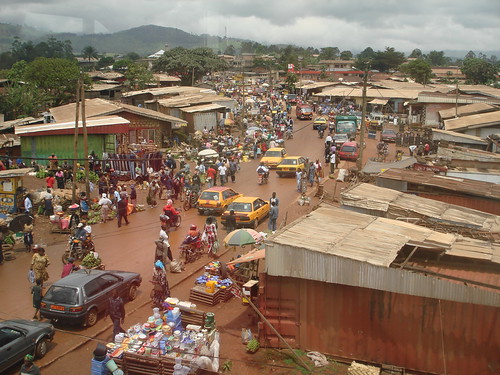 View of the market in Bamenda, Cameroon.
Photo taken from the VODECAM (Volunteer Development for Youth in Cameroon) office.
Saturday, June 16th 2007
Wednesday, October 31, 2007
Broken Dreams
As a former high school English tutor, as a child raised in part by a Mexican immigrant, and as the daughter of a high school biology teacher, who has taught many ‘limited English speaking’ classes, immigration is an issue to which I inadvertently have strong emotional ties. Immigration has been a heavily debated issue in the past couple of years and will no doubt continue to be a heated subject as the 2008 election nears. Although substantial immigration legislation was opposed in June, last Wednesday, the immigration waters were retested with a smaller piece of legislation. The senate however also rejected the Dream Act bill with a 52-44 vote, 8 short of the 60-votes needed for the bill to proceed to an actual debate on the senate floor.
The dream act (the Development, Relief and Education for Alien Minors Act) is a bill that was sponsored by Illinois senator Richard J. Durbin. The act would have given provisional legal status to illegal immigrant students who entered the country before they were 16 years of age and have since lived in the U.S. for at least 5 years. One of the main concerns for conservative republicans is that they believe illegal immigrants are “lawbreakers” and therefore should not be “rewarded” with amnesty or citizenship. The counter argument however, and basis for the Dream Act is that these students did not have a say in entering the country and therefore should not be penalized by their parents’ decisions. The dream Act targets students who were brought into the country by their parents when they were very young. These students would have had to complete high school and have no criminal record in order to gain this provisional legal status.
If in addition to completing their primary education, these students either attended 2 years of college or served 2 years in the U.S. military, the provisional status would be lifted and they would be able to apply for citizenship after 5 years. Although it was a small piece of legislation compared to the broad legislation presented last summer, “negative votes came from Republicans and some Democrats who were reluctant to reopen the bitterly divisive debate over immigration for what they called a narrow piece of legislation”. Why are senators afraid to reopen the debate? Because any kind of ‘solution’ would be both controversial and expensive.
Americans are spending money and resources to educate immigrant students and though they are motivated and qualify to attend college, many Americans would rather have them deported than actually have them contribute to the U.S. economy. This is in part because the majority of illegal immigrants (approximately 80%) are Latino, of which about 60% are Mexican. In the minds of many U.S., (especially California) residents, Mexican immigrants are responsible for “stealing American jobs”, overpopulating and lowering standards in public schools, and taking up resources that they have no legal rights to. Many Americans envision “illegal aliens” to be Mexican families crossing the boarder by jumping fences or hiding in the trunks of cars. However, Maria Echeveste, former deputy chief of staff under President Clinton, told UC Berkeley students in a lecture last Wednesday, that a majority of illegal immigrants are actually legal workers who overstay their work visas.
She highlighted the hypocrisy in the temporary worker programs. “We are benefiting from having a workforce with no rights”. She argued that Americans want temporary workers who will work for low wages, perform jobs that few Americans would be willing to perform, but we do not want to grant these people citizenship. Because most illegal immigrants come into the country legally on temporary work visas, spending more money on ‘securing the border’ would be both costly and ineffective. Trying to deport the 12 million illegal immigrants that are already currently residing in the U.S. would also be a misuse of resources. In order to find all of the illegal immigrants and send them home, it would take over 5 years and cost more than the entire budget of the department of Homeland Security (according to the Center for American Progress).
The Dream act was a small attempt to give rights to immigrant students. Students who have worked just as hard, if not harder than American students to receive an education and motivate themselves to achieve more than was ever expected of them. Students that are willing to fight in the military for a country that they are not allowed to call their own. What is the point in spending taxpayers’ money to educate these students, push them to want a college education, and then not allow them the right to American citizenship?
When did the American dream become a dream with restrictions and boundaries? A dream only for the “lucky ones” who were born in the U.S.?
"Give me your tired, your poor,
Your huddled masses yearning to breathe free,
The wretched refuse of your teeming shore.
Send these, the homeless, tempest-tossed to me.
I lift my lamp beside the golden door."
When did the inscription on the Statue of Liberty, our national monument, and the symbol of our heritage lose its meaning?
The dream act (the Development, Relief and Education for Alien Minors Act) is a bill that was sponsored by Illinois senator Richard J. Durbin. The act would have given provisional legal status to illegal immigrant students who entered the country before they were 16 years of age and have since lived in the U.S. for at least 5 years. One of the main concerns for conservative republicans is that they believe illegal immigrants are “lawbreakers” and therefore should not be “rewarded” with amnesty or citizenship. The counter argument however, and basis for the Dream Act is that these students did not have a say in entering the country and therefore should not be penalized by their parents’ decisions. The dream Act targets students who were brought into the country by their parents when they were very young. These students would have had to complete high school and have no criminal record in order to gain this provisional legal status.
If in addition to completing their primary education, these students either attended 2 years of college or served 2 years in the U.S. military, the provisional status would be lifted and they would be able to apply for citizenship after 5 years. Although it was a small piece of legislation compared to the broad legislation presented last summer, “negative votes came from Republicans and some Democrats who were reluctant to reopen the bitterly divisive debate over immigration for what they called a narrow piece of legislation”. Why are senators afraid to reopen the debate? Because any kind of ‘solution’ would be both controversial and expensive.
Americans are spending money and resources to educate immigrant students and though they are motivated and qualify to attend college, many Americans would rather have them deported than actually have them contribute to the U.S. economy. This is in part because the majority of illegal immigrants (approximately 80%) are Latino, of which about 60% are Mexican. In the minds of many U.S., (especially California) residents, Mexican immigrants are responsible for “stealing American jobs”, overpopulating and lowering standards in public schools, and taking up resources that they have no legal rights to. Many Americans envision “illegal aliens” to be Mexican families crossing the boarder by jumping fences or hiding in the trunks of cars. However, Maria Echeveste, former deputy chief of staff under President Clinton, told UC Berkeley students in a lecture last Wednesday, that a majority of illegal immigrants are actually legal workers who overstay their work visas.
She highlighted the hypocrisy in the temporary worker programs. “We are benefiting from having a workforce with no rights”. She argued that Americans want temporary workers who will work for low wages, perform jobs that few Americans would be willing to perform, but we do not want to grant these people citizenship. Because most illegal immigrants come into the country legally on temporary work visas, spending more money on ‘securing the border’ would be both costly and ineffective. Trying to deport the 12 million illegal immigrants that are already currently residing in the U.S. would also be a misuse of resources. In order to find all of the illegal immigrants and send them home, it would take over 5 years and cost more than the entire budget of the department of Homeland Security (according to the Center for American Progress).
The Dream act was a small attempt to give rights to immigrant students. Students who have worked just as hard, if not harder than American students to receive an education and motivate themselves to achieve more than was ever expected of them. Students that are willing to fight in the military for a country that they are not allowed to call their own. What is the point in spending taxpayers’ money to educate these students, push them to want a college education, and then not allow them the right to American citizenship?
When did the American dream become a dream with restrictions and boundaries? A dream only for the “lucky ones” who were born in the U.S.?
"Give me your tired, your poor,
Your huddled masses yearning to breathe free,
The wretched refuse of your teeming shore.
Send these, the homeless, tempest-tossed to me.
I lift my lamp beside the golden door."
When did the inscription on the Statue of Liberty, our national monument, and the symbol of our heritage lose its meaning?
Saturday, October 20, 2007
Investing in ‘The Sunny Continent’ of Africa
In the past couple of years, and more recently in the past couple of months, there have been a number of different articles written on the recent U.S. obsession with “Saving Africa”. Authors of these articles are rightfully disturbed by the general misplaced ‘need to rescue’ inflicting Americans, especially college students, like the ones described in “Stop trying to save Africa” by Uzodinma Iweala, author of Beasts of No Nation. However, few would argue that the intentions of these individuals are not genuine (assuming that there is no such thing as a completely altruistic act).
While Americans may be “wracked by guilt” and see Africa as an opportunity to fulfill some sort of savior-like manifest destiny, it is becoming increasingly clear that Africans do not need nor want to be ‘saved’. Africa is not and should not be a charity case for the U.S. Iweala says, “There is no African, myself included, who does not appreciate the help of the wider world, but we do question whether aid is genuine or given in the spirit of affirming one's cultural superiority.” Whether this notion of superiority is subconscious or not, let’s for a moment, ignore the idea that ‘saving Africa’ is a concept based solely on self-gratification. Let’s assume instead that most Americans, however ignorant or misinformed, are genuinely looking for a way to make a positive difference for Africans.
In a world that is driven by the power and greed of capitalist nations, charity will only provide small, short term effects that not only have the potential to perpetuate the stereotype of African countries needing to be rescued, but may also deter Africans from taking action and working together to create solutions for themselves. Michael Maren begins the first chapter of his book, The Road to Hell with a quotation from Oscar Wilde: “Charity creates a multitude of sin.”
So, if ‘saving’ and charity are out. What then, can Americans, and the “perky blond college student” that Iweala describes in his article, do to actually assist Africa in it’s struggle to fight corrupt governments, eliminate poverty & disease, and become a respected and active participant in the global economy?
In a recent Economist article “The Sunny Continent”, Sam Jonah, a Ghanaian businessman affirms that the “‘help’ Africa has had from outside has been of the wrong sort”. However, he does not deny that other countries can make a positive impact. He cites examples of rich European countries investing in poor European countries, “not as charity, but because they saw a win-win opportunity.” It seems that while Americans have been obsessing over Africa as a black hole, African businesses have begun to successfully emerge and are starting to create competition on the international stage. For the sake of both Americans and Africans we have to let go of the idea of American exceptionalism and realize that Africa is stepping onto the international playing field with or without our help.
A 2005 Money Week article cited (figures from The World Bank) that Africa offered 'the highest returns on foreign direct investment of any region in the world’. The article also stressed, “In the long term, Africa's best chance for prosperity and stability is not from dependency on foreign aid, but from sustained private investment and enterprise. Currently [2005], only about 1% of the private capital in the world is invested in sub-Saharan Africa”. So if you really want to help Africa, forget the guilt from past exploitations and forget the idea that Africa is a black hole needing to be rescued. Start thinking of Africa as the ‘sunny continent’ and about how you can show your support for and commitment to its success by investing in its bright future. While I’m not sure if it is really possible to empower Africa, I do believe that we can support Africa as it begins to empower itself.
So now the question is … how can we invest in the future of Africa? A question to which the answer is not yet clear. There are some options, however, as of now, they are limited. One microfinance option is offered through a nonprofit organization called Kiva, which “lets you connect with and loan money to unique small businesses in the developing world” (including but not limited to Africa). Other options are slightly more complicated because of the low demand for African funds. Some other options listed in another Money Week article, are investing in:
~ South African mining stocks through funds like: Merrill Lynch Gold & General, or JPMF Natural Resources.
~ The Genesis fund which is 10% invested in South Africa and 5% in Egypt, with smaller holdings in Ghana, Kenya, and other African states.
~ Investec whose managers are particularly keen on Tunisia, Nigeria and Egypt and has risen 60% since launch in November 2005. However, the minimum investment is $1m. ouch.
~ Imara African Opportunities Fund, which was launched in 2005 to allow international investors access to Africa’s emerging stock markets. It has limited exposure to South Africa and heavy weightings in Kenya, Zambia, Egypt, and Nigeria, with an average price-earnings ratio across its portfolio of about nine times.
Alternatively, investors can consider investing directly in South African plays such as the Anglo-South African bank, or European-listed colonial' firms with significant African assets, such as Belgium's SIPEF.
While investing may be logistically and financially difficult and in some cases nearly impossible, the attitude that comes with the idea of investing is just as important. When you invest in something, you believe that it will succeed. This belief, in and of itself, is a positive step towards ‘helping’ Africa.
While Americans may be “wracked by guilt” and see Africa as an opportunity to fulfill some sort of savior-like manifest destiny, it is becoming increasingly clear that Africans do not need nor want to be ‘saved’. Africa is not and should not be a charity case for the U.S. Iweala says, “There is no African, myself included, who does not appreciate the help of the wider world, but we do question whether aid is genuine or given in the spirit of affirming one's cultural superiority.” Whether this notion of superiority is subconscious or not, let’s for a moment, ignore the idea that ‘saving Africa’ is a concept based solely on self-gratification. Let’s assume instead that most Americans, however ignorant or misinformed, are genuinely looking for a way to make a positive difference for Africans.
In a world that is driven by the power and greed of capitalist nations, charity will only provide small, short term effects that not only have the potential to perpetuate the stereotype of African countries needing to be rescued, but may also deter Africans from taking action and working together to create solutions for themselves. Michael Maren begins the first chapter of his book, The Road to Hell with a quotation from Oscar Wilde: “Charity creates a multitude of sin.”
So, if ‘saving’ and charity are out. What then, can Americans, and the “perky blond college student” that Iweala describes in his article, do to actually assist Africa in it’s struggle to fight corrupt governments, eliminate poverty & disease, and become a respected and active participant in the global economy?
In a recent Economist article “The Sunny Continent”, Sam Jonah, a Ghanaian businessman affirms that the “‘help’ Africa has had from outside has been of the wrong sort”. However, he does not deny that other countries can make a positive impact. He cites examples of rich European countries investing in poor European countries, “not as charity, but because they saw a win-win opportunity.” It seems that while Americans have been obsessing over Africa as a black hole, African businesses have begun to successfully emerge and are starting to create competition on the international stage. For the sake of both Americans and Africans we have to let go of the idea of American exceptionalism and realize that Africa is stepping onto the international playing field with or without our help.
A 2005 Money Week article cited (figures from The World Bank) that Africa offered 'the highest returns on foreign direct investment of any region in the world’. The article also stressed, “In the long term, Africa's best chance for prosperity and stability is not from dependency on foreign aid, but from sustained private investment and enterprise. Currently [2005], only about 1% of the private capital in the world is invested in sub-Saharan Africa”. So if you really want to help Africa, forget the guilt from past exploitations and forget the idea that Africa is a black hole needing to be rescued. Start thinking of Africa as the ‘sunny continent’ and about how you can show your support for and commitment to its success by investing in its bright future. While I’m not sure if it is really possible to empower Africa, I do believe that we can support Africa as it begins to empower itself.
So now the question is … how can we invest in the future of Africa? A question to which the answer is not yet clear. There are some options, however, as of now, they are limited. One microfinance option is offered through a nonprofit organization called Kiva, which “lets you connect with and loan money to unique small businesses in the developing world” (including but not limited to Africa). Other options are slightly more complicated because of the low demand for African funds. Some other options listed in another Money Week article, are investing in:
~ South African mining stocks through funds like: Merrill Lynch Gold & General, or JPMF Natural Resources.
~ The Genesis fund which is 10% invested in South Africa and 5% in Egypt, with smaller holdings in Ghana, Kenya, and other African states.
~ Investec whose managers are particularly keen on Tunisia, Nigeria and Egypt and has risen 60% since launch in November 2005. However, the minimum investment is $1m. ouch.
~ Imara African Opportunities Fund, which was launched in 2005 to allow international investors access to Africa’s emerging stock markets. It has limited exposure to South Africa and heavy weightings in Kenya, Zambia, Egypt, and Nigeria, with an average price-earnings ratio across its portfolio of about nine times.
Alternatively, investors can consider investing directly in South African plays such as the Anglo-South African bank, or European-listed colonial' firms with significant African assets, such as Belgium's SIPEF.
While investing may be logistically and financially difficult and in some cases nearly impossible, the attitude that comes with the idea of investing is just as important. When you invest in something, you believe that it will succeed. This belief, in and of itself, is a positive step towards ‘helping’ Africa.
Tuesday, October 9, 2007
Swim a mile for women with cancer
This past Sunday, I attended the Women’s Cancer Resource Center’s biggest event of the year: Swim A Mile For Women With Cancer. When I volunteered to be a “lane counter” I assumed I would be counting, but I didn’t really know what to expect beyond that. Imagine my surprise when I showed up and was handed a cowbell and a couple of noisemakers. I was told that I would not only be tracking each of the 36 laps (1 mile) for the swimmers, but I would also be their personal cheerleader until they had completed their goal – whatever that goal may be. It was a total blast!
The event allows swimmers of all experience levels to swim a mile and raise funds in support of women with cancer. The fun part was that there were no rules: some swimmers swam with snorkels, some with foam kickboards, and others with scuba fins. The music blasting in the background - “We are family” and “Hey now, you’re an all-star” – exemplified the purpose of the event. It was not a competition, but a celebration.
There were females of all different ages, shapes, sizes, and colors. Some women had long hair, while other women had thin hair that was just beginning to grow back after treatment. Some were swimming in “honor of” while others were swimming in “memory of”. All of the women were strong and all of them beautiful. This event was a celebration of these women because in some way or another, their lives have been affected by cancer and they are fighting and surviving – for themselves, for their mothers, for their sisters, their friends, and for their children. Some swimmers even had names written in permanent marker on their bodies. Names of the people they were swimming for.
The first women for whom I counted, had the name Sandy written across her bicep and underneath the name, the word “mom” bounded by a heart. She finished her mile at record speed and when the master of ceremonies asked if she wanted to say a few words about her mother Sandy, she said she did not … “it would be too difficult not to cry”.
A group of friends came in sporting swim caps with the phrase “Cancer Sucks”.
One woman swam with her daughters - it was their 7th year swimming. Another swam with her young son, struggling to finish the 36 laps, but unwilling to give up. He finished.
A group of 4 eight-year old girls each swam ¼ mile to complete a one-mile swim in honor of a friend’s grandfather.
There were even a few men swimming for their wives or daughters.
One older woman was there for her daughter. She proudly carried a framed picture of her child whom she had lost to cancer at age 38.
I have tears in my eyes as i am writing this, but the truth is, it was not a sad event. There was too much support and love, too much empowerment, too much determination, and far too much strength. This community bond was unlike any bond i have ever witnessed.
The nature of this bond epitomizes WCRC’s mission: “to empower women with cancer to be active and informed consumers and survivors; to provide community for women with cancer and their supporters; to educate the general community about cancer; and to be actively involved in the struggle for a life-affirming, cancer-free society.”
The event allows swimmers of all experience levels to swim a mile and raise funds in support of women with cancer. The fun part was that there were no rules: some swimmers swam with snorkels, some with foam kickboards, and others with scuba fins. The music blasting in the background - “We are family” and “Hey now, you’re an all-star” – exemplified the purpose of the event. It was not a competition, but a celebration.
There were females of all different ages, shapes, sizes, and colors. Some women had long hair, while other women had thin hair that was just beginning to grow back after treatment. Some were swimming in “honor of” while others were swimming in “memory of”. All of the women were strong and all of them beautiful. This event was a celebration of these women because in some way or another, their lives have been affected by cancer and they are fighting and surviving – for themselves, for their mothers, for their sisters, their friends, and for their children. Some swimmers even had names written in permanent marker on their bodies. Names of the people they were swimming for.
The first women for whom I counted, had the name Sandy written across her bicep and underneath the name, the word “mom” bounded by a heart. She finished her mile at record speed and when the master of ceremonies asked if she wanted to say a few words about her mother Sandy, she said she did not … “it would be too difficult not to cry”.
A group of friends came in sporting swim caps with the phrase “Cancer Sucks”.
One woman swam with her daughters - it was their 7th year swimming. Another swam with her young son, struggling to finish the 36 laps, but unwilling to give up. He finished.
A group of 4 eight-year old girls each swam ¼ mile to complete a one-mile swim in honor of a friend’s grandfather.
There were even a few men swimming for their wives or daughters.
One older woman was there for her daughter. She proudly carried a framed picture of her child whom she had lost to cancer at age 38.
I have tears in my eyes as i am writing this, but the truth is, it was not a sad event. There was too much support and love, too much empowerment, too much determination, and far too much strength. This community bond was unlike any bond i have ever witnessed.
The nature of this bond epitomizes WCRC’s mission: “to empower women with cancer to be active and informed consumers and survivors; to provide community for women with cancer and their supporters; to educate the general community about cancer; and to be actively involved in the struggle for a life-affirming, cancer-free society.”
Subscribe to:
Posts (Atom)